
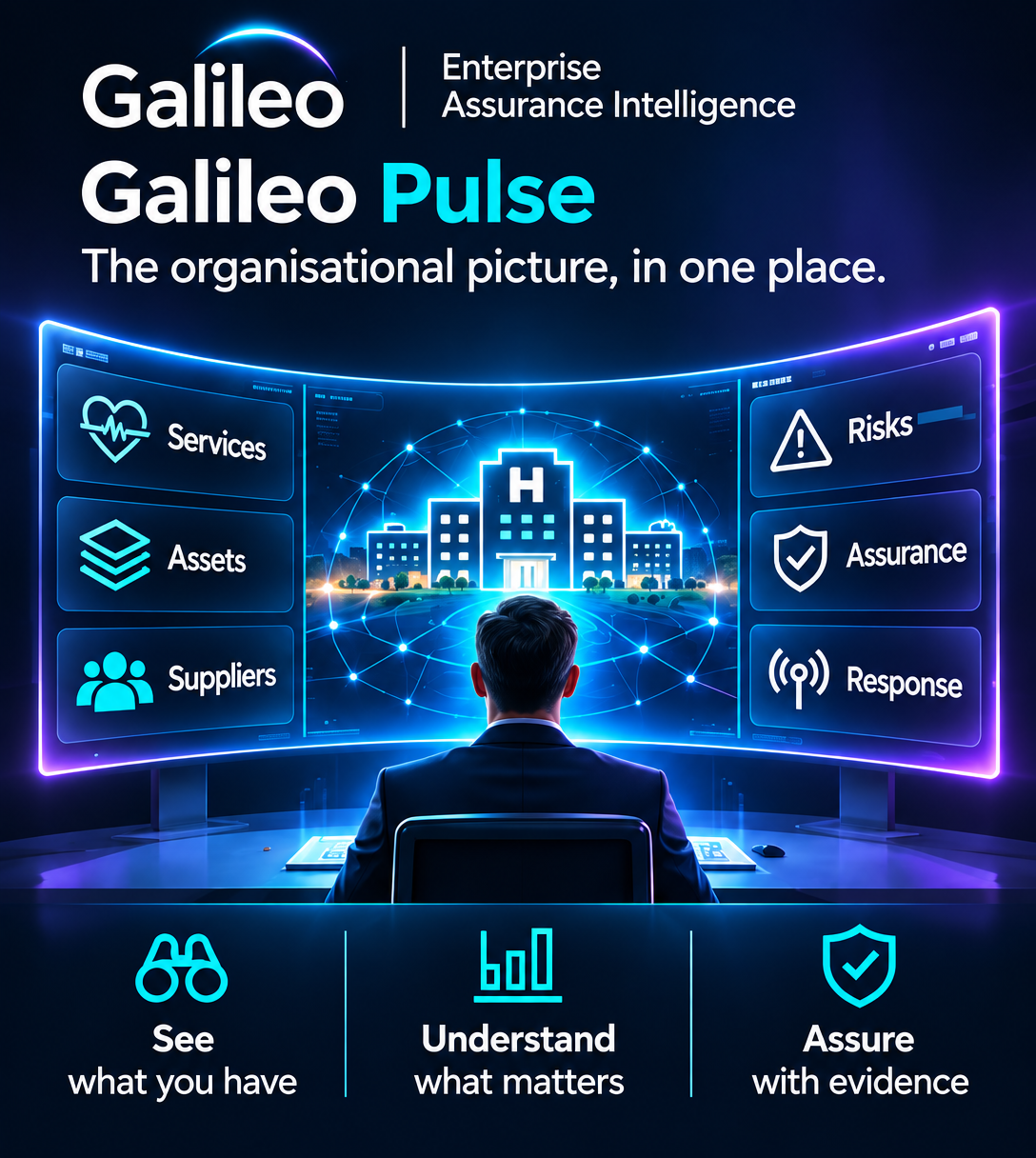
Galileo Pulse
See the whole organisational picture.
Connect executive visibility to the underlying evidence and operational reality.
Enterprise Assurance Intelligence
Galileo connects services, technology, suppliers, ownership, risks and evidence—giving executives the context to understand what is affected, what supports confidence and what needs action.
Enterprise Assurance Intelligence connects organisational information with the evidence and responsibilities behind a decision.
The problem
When the board asks whether a critical service is resilient, whether a supplier can be relied on, or what needs prioritising, the answer often requires people to reconcile separate records, chase owners and assemble evidence. Galileo connects that picture and makes the gaps visible.
Understand what is affected. Find the supporting evidence. Identify who needs to act.
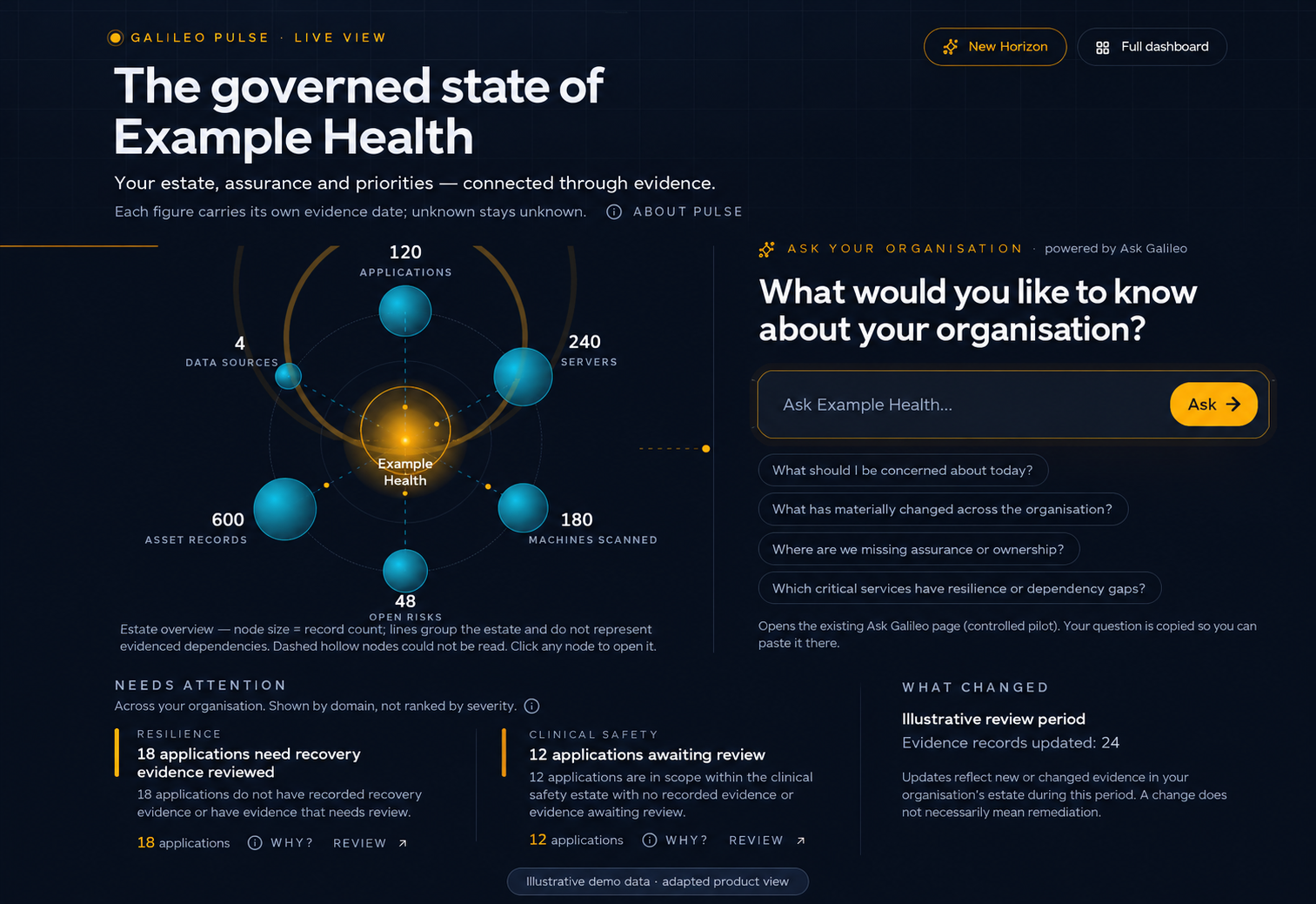
01 / A worked example
Follow the recorded connections between a service, its technology, suppliers, ownership and recovery arrangements. See what supports confidence—and where evidence needs attention.
“Not yet evidenced” identifies a gap in the available information. It does not mean the arrangement does not exist.
02 / Explore Galileo
Organisations don’t lack information. They lack the connections between information that make it useful for decisions. Galileo brings together organisational intelligence, assets, dependencies, evidence, risk and response into one connected assurance environment—its capabilities reinforcing each other.
See the whole organisational picture.
Connect executive visibility to the underlying evidence and operational reality.
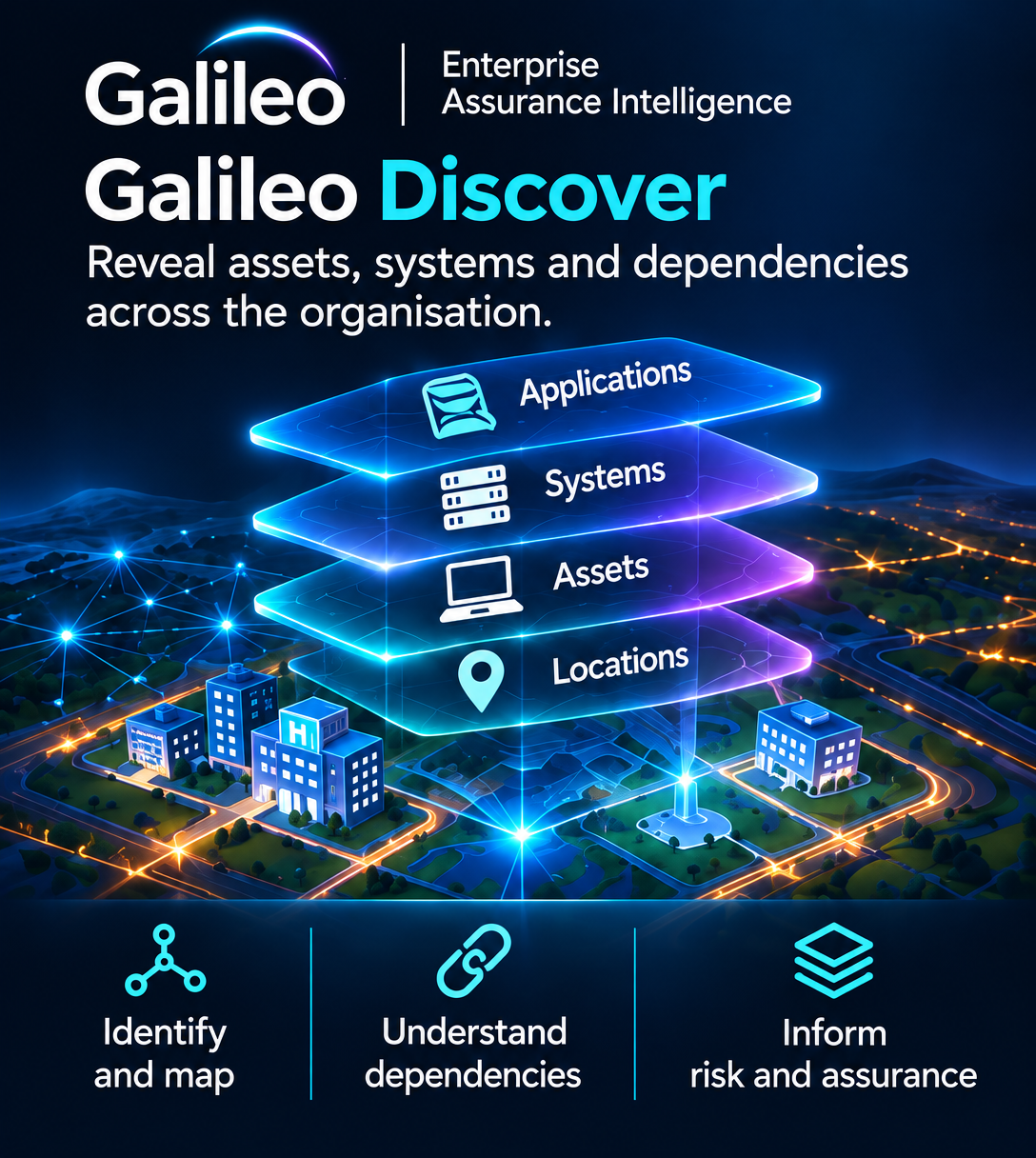
Understand what you have and what it supports.
Reveal assets, applications, systems and their dependencies.
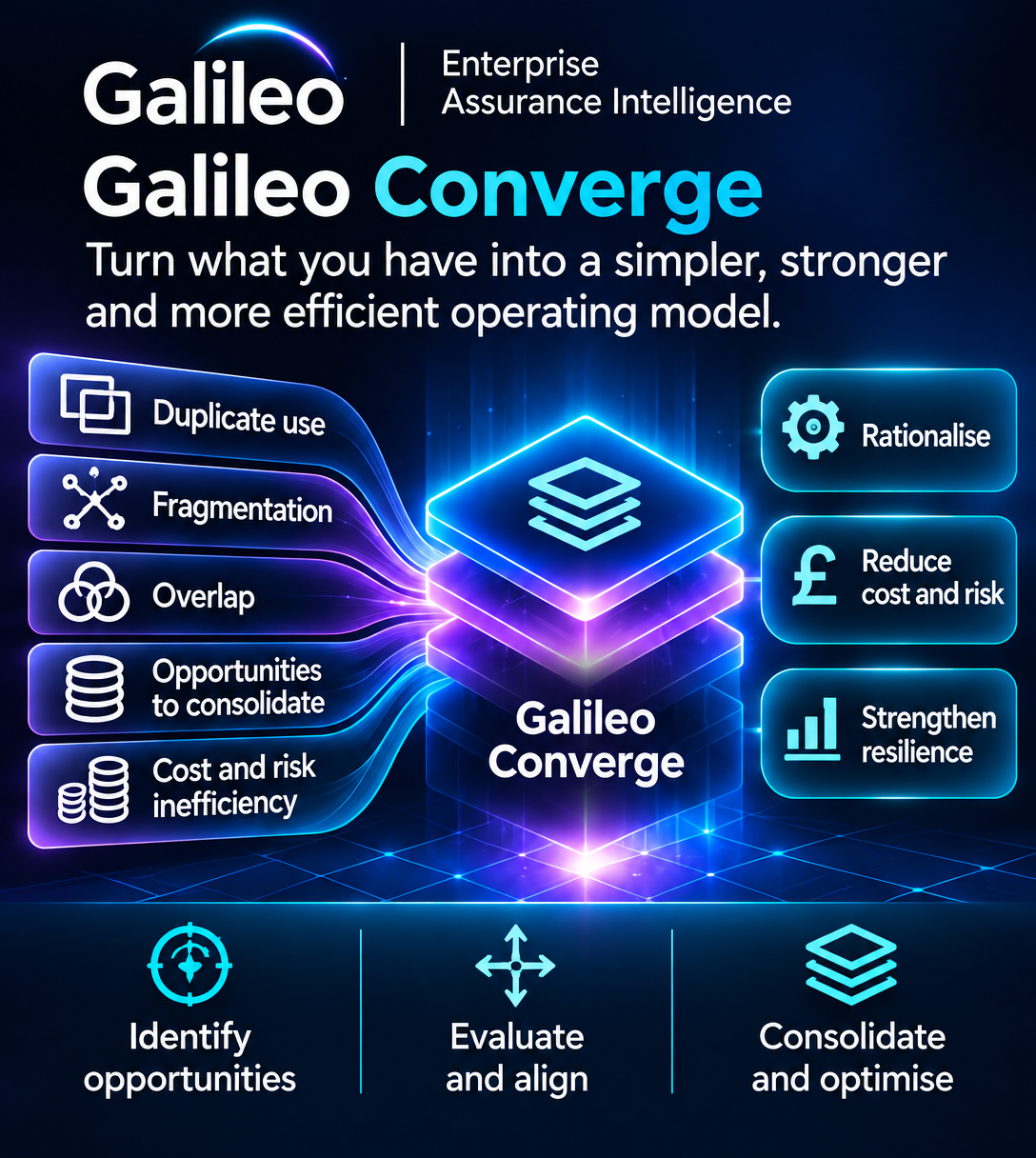
Identify duplication and opportunities to simplify.
Expose fragmentation, overlapping solutions and opportunities for consolidation.

Gather the information that matters.
Coordinate structured information and evidence collection across teams and suppliers.
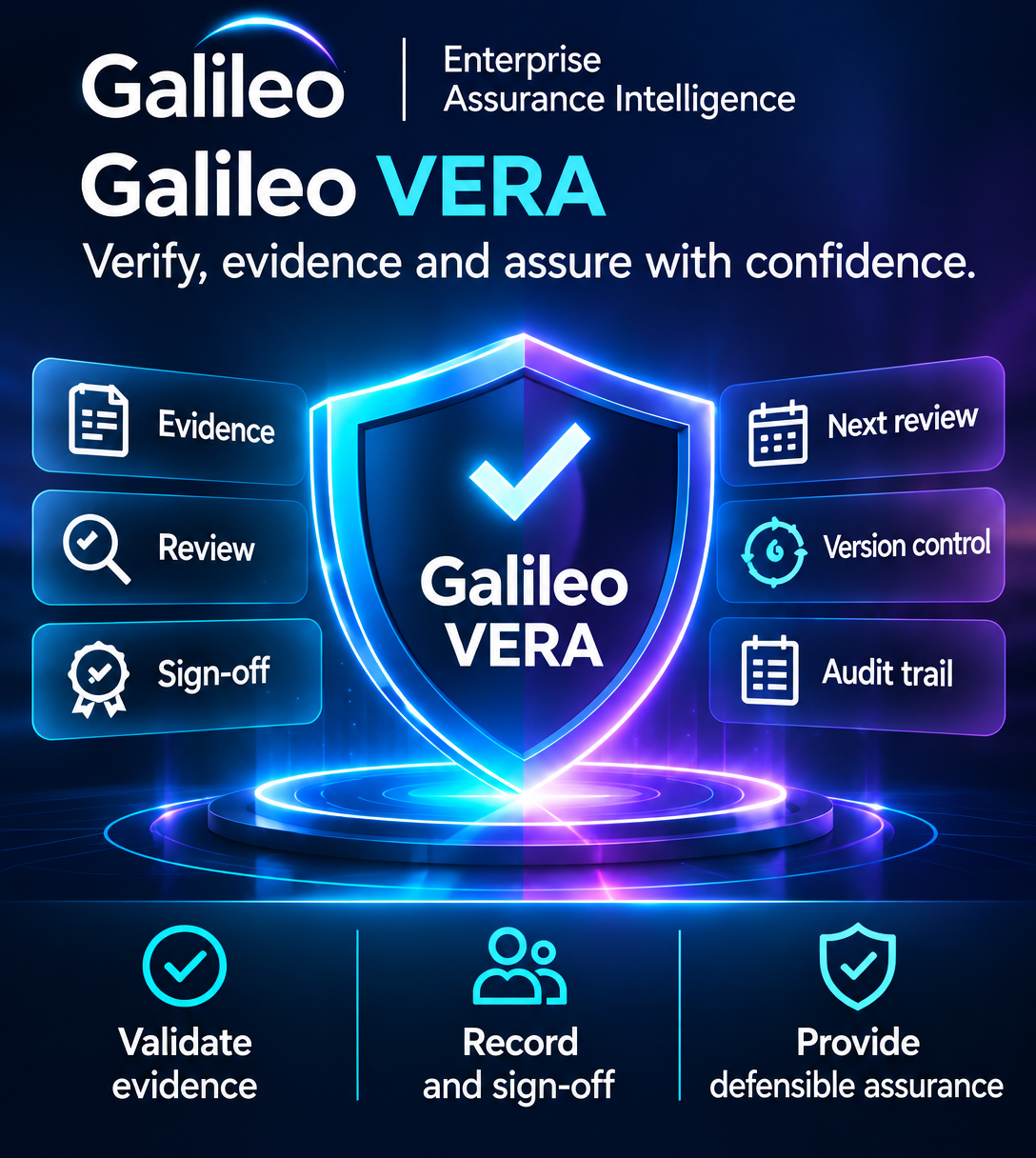
Turn evidence into defensible assurance.
Connect reviews, verification, accountability and sign-off.
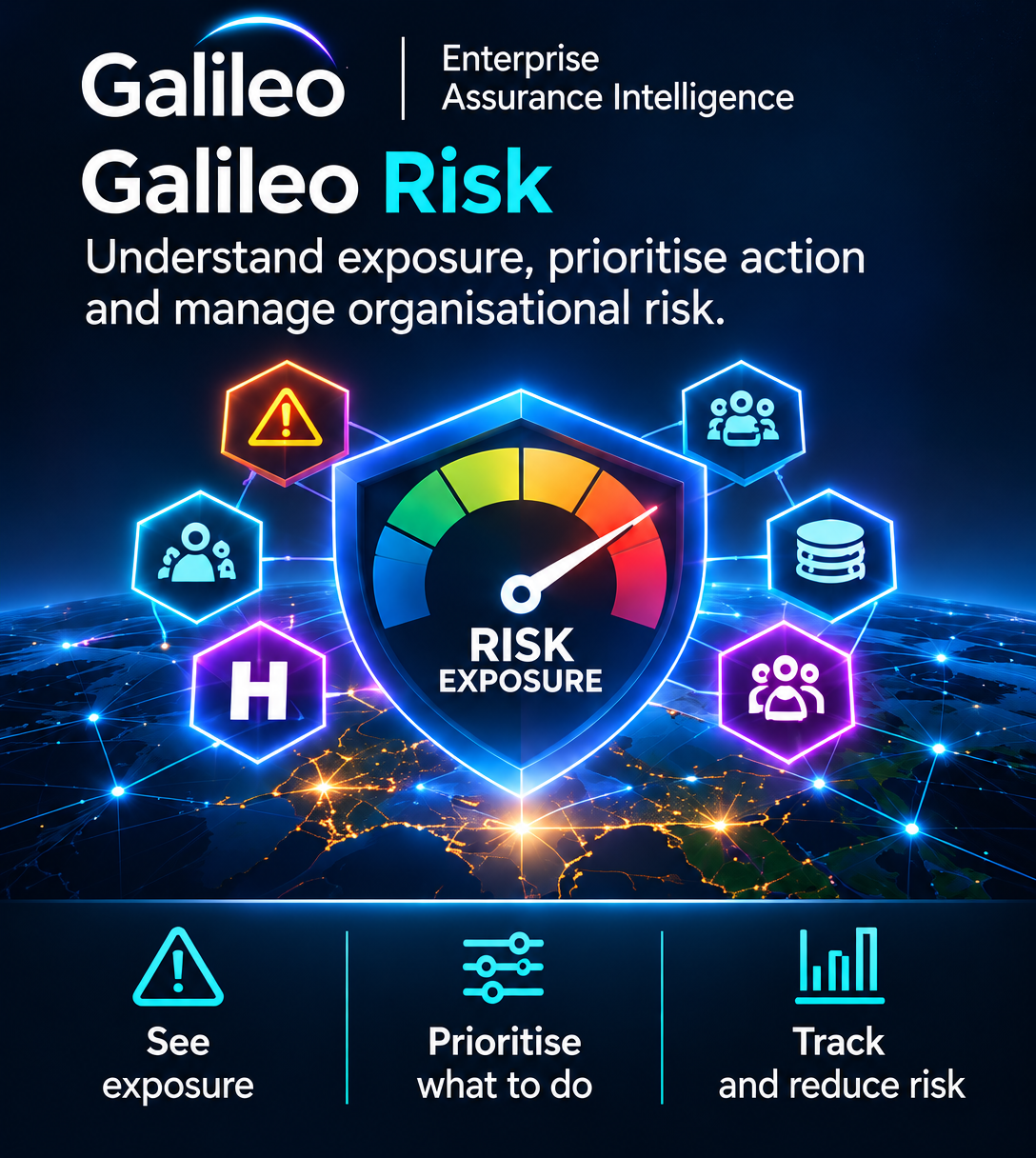
Understand exposure and prioritise decisions.
Connect organisational risks to services, controls and consequences.
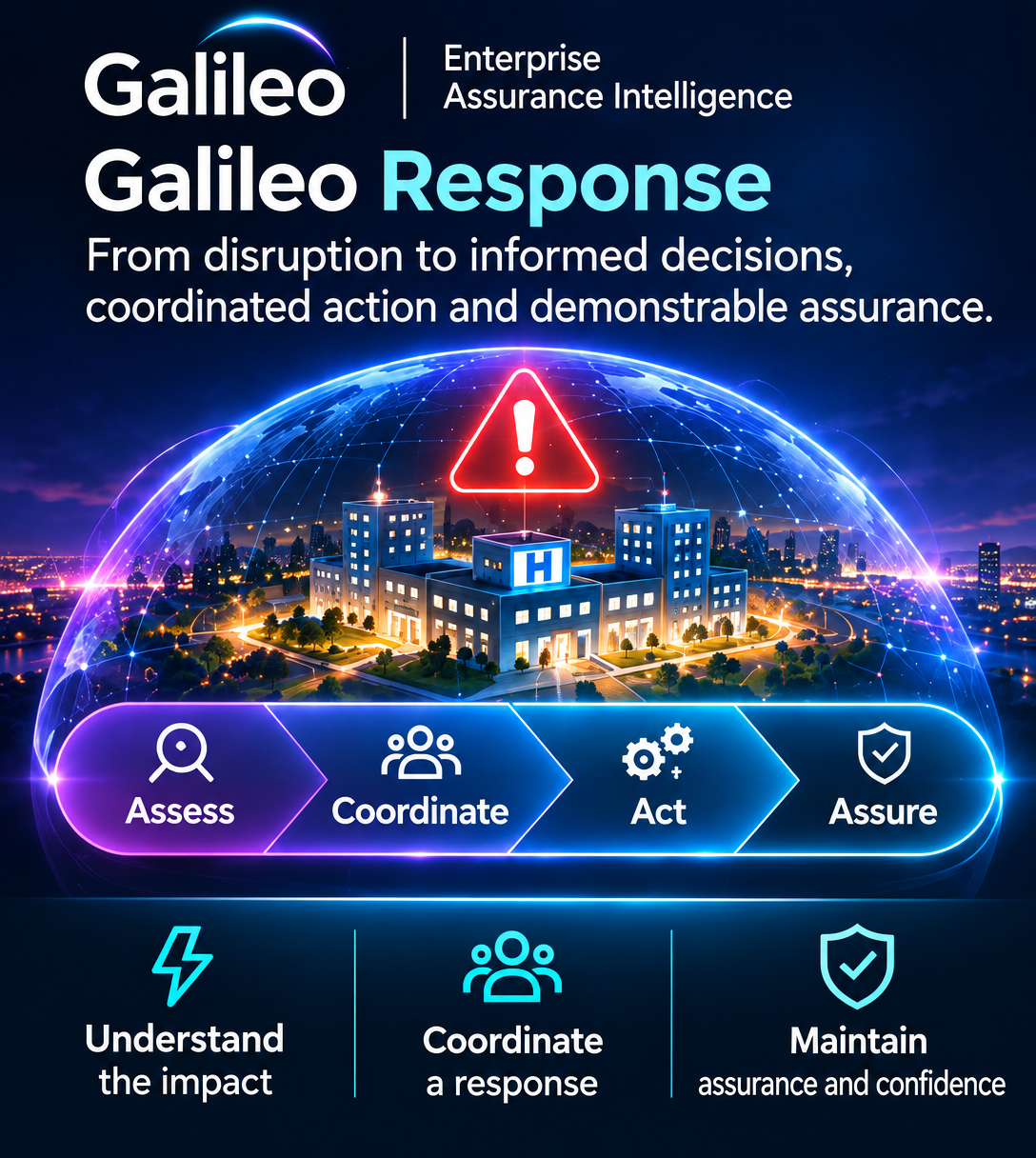
From disruption to informed decisions.
Connect incident impact, coordinated action, executive oversight and assurance.
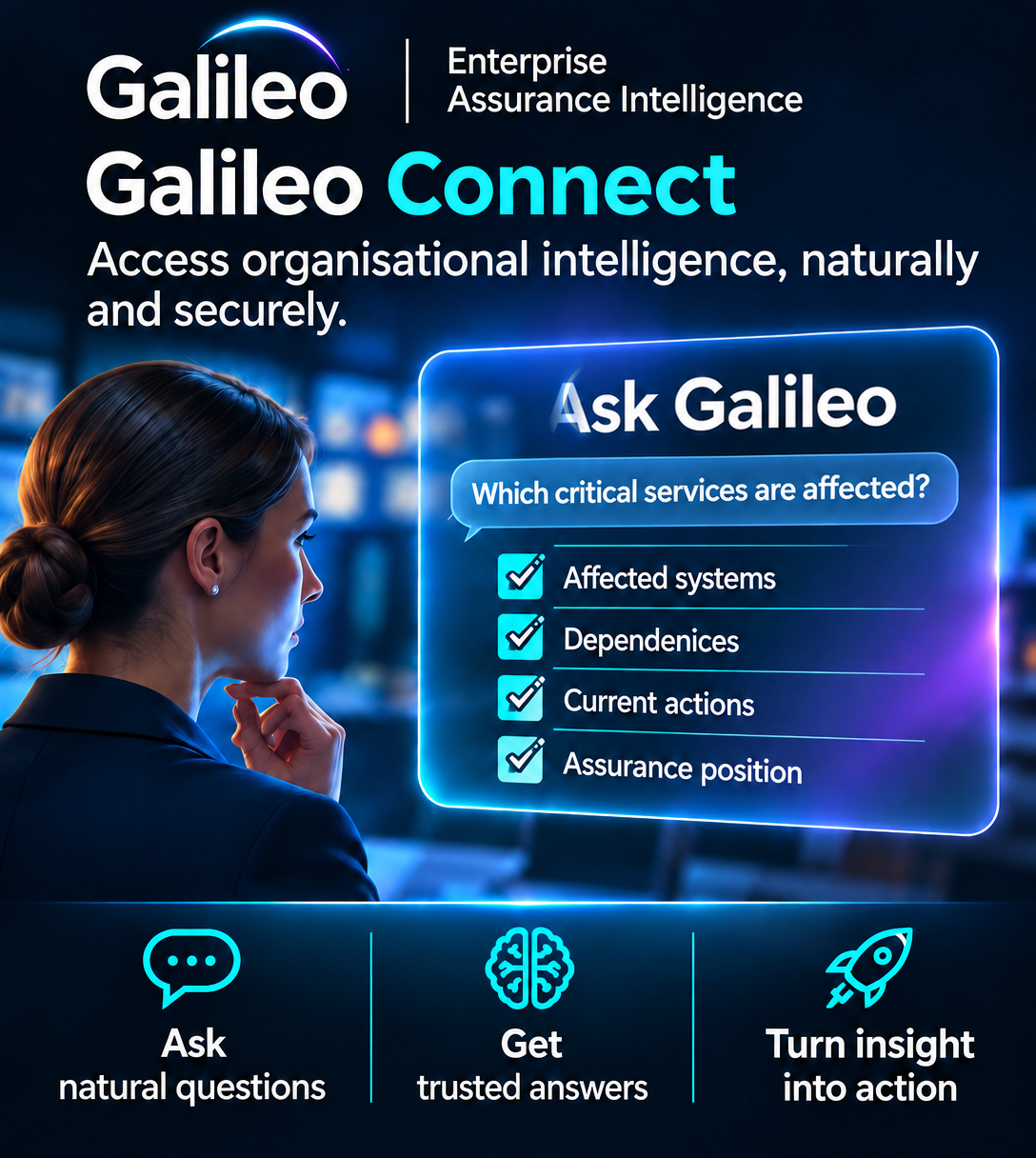
Make organisational intelligence accessible.
Enable governed interaction with connected organisational knowledge.
Imagine a critical supplier announces a security vulnerability.
Illustrative example of how the capabilities work together.
03 / Decisions
Questions Galileo helps people investigate. People make the decisions.
Bring priorities, ownership and supporting evidence together to inform leadership discussions.
Explore recorded dependencies, contract information and available assurance before deciding what needs review.
Follow available reviews and supporting information, with gaps and review status visible.
Identify potentially relevant evidence, outstanding requirements and the reviews needed to inform the assessment.
04 / Galileo in practice
Explore how Galileo brings organisational context into reviews, evidence reuse and commercial priorities—connecting leadership questions with the operational work behind them.
See who is reviewing what, where progress stands and what needs attention. Illustrated in VERA, Galileo’s review and assurance workflow.
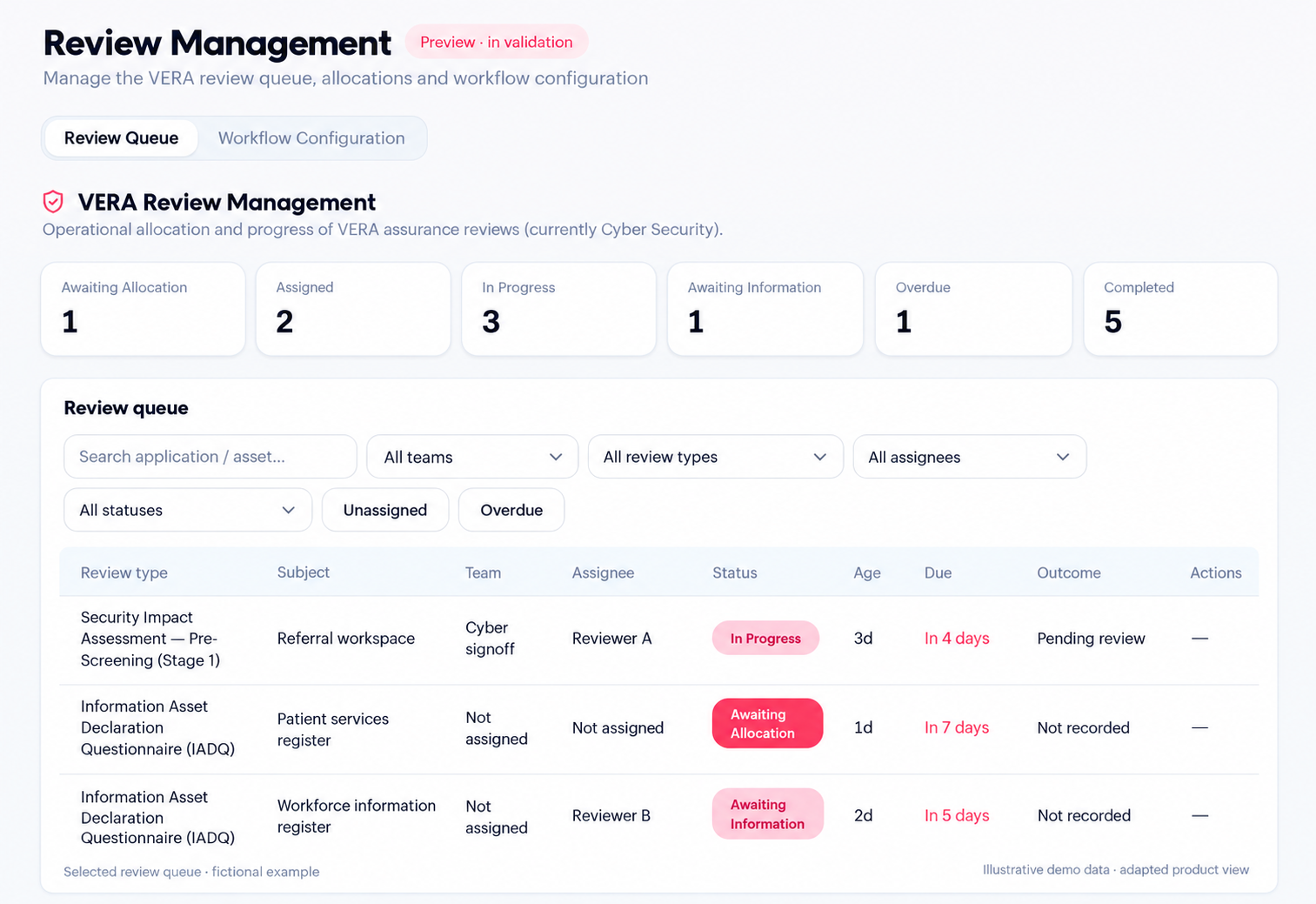
Illustrated workflow: Cyber Security reviews.
05 / Who it is for
Where important services depend on interconnected technology, suppliers and teams, assurance decisions need organisational context. Galileo helps bring that context into leadership discussions and the work that follows.
Understand dependencies, priorities and the implications of change.
Investigate service continuity and the evidence supporting recovery arrangements.
Connect technical findings, risks, ownership and evidence to organisational impact.
Understand what supports an assurance position and where decisions or action are needed.
Healthcare and financial market infrastructure are clear examples of environments where service dependencies, third parties and regulatory scrutiny make context essential. The same decision pattern is relevant across energy, utilities and transport.
Illustrative scenario.
Bring contributing organisations, sites and teams into an authorised wider view while retaining where information came from, who owns it and the context behind it. Belonging to a wider group does not, by itself, grant access to another organisation’s records.
06 / Getting started
Begin with a priority service, supplier or assurance decision. Bring together the relevant information, review the connections and build the picture over time.
Use existing records, supported imports and configured integrations.
Confirm relationships, ownership and supporting information.
Use supported review workflows and reporting to follow through.
Supported spreadsheet imports and source-specific uploads, including Datix risk exports and Rapid7 scan files. Supported integrations can bring information from selected systems; options depend on the source and configuration. Authorised teams can add records and use AI-assisted document extraction, with every extracted item reviewed by a person before it is committed.
Evidence reuse
Explore how relevant evidence can support different assurance requirements while retaining its source, review status and currency. Evidence coverage identifies potentially relevant information and gaps; it does not establish compliance.
Explore evidence coverage for CAF, ISO/IEC 27001 and clinical safety requirements, including DCB0129 and DCB0160.
The Evidence Coverage preview includes requirement summaries for frameworks such as the NCSC Cyber Assessment Framework (CAF), ISO/IEC 27001, DCB0129 and DCB0160. Summaries are written by Galileo and are not the official text of licensed standards. Suggested evidence requires review, coverage is not a compliance conclusion, and Galileo does not certify compliance.
Galileo Pulse
Understand what is affected, what supports confidence and where action is needed.
See a worked example